
How Do I Sell My Andy Warhol?
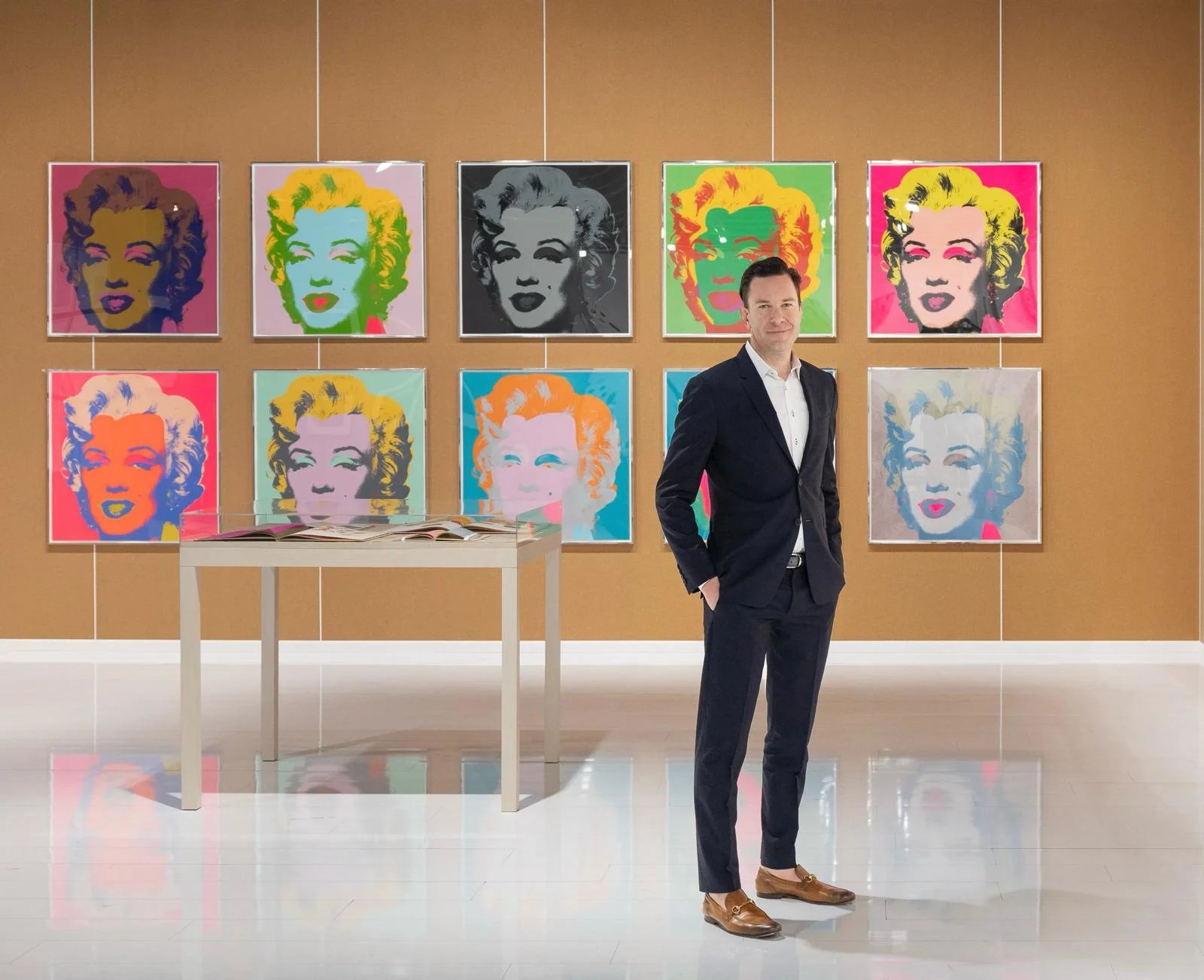
I have sold many Andy Warhol’s over the last 25 years from paintings to prints to works on paper. The Warhol market remains one of the largest and strongest in the world. When assessing the value of your Warhol it is important to understand several of the markers of value which can range from the thousands of dollars to over $100 million.
These factors include:
the medium
strength of image
year of production
size
And they can vary significantly.
It is imperative to determine the exact work you have, its condition, and the best selling venue.
If you bought your work in the 1990s or before you are almost certain to be in line for an excellent return on your investment.
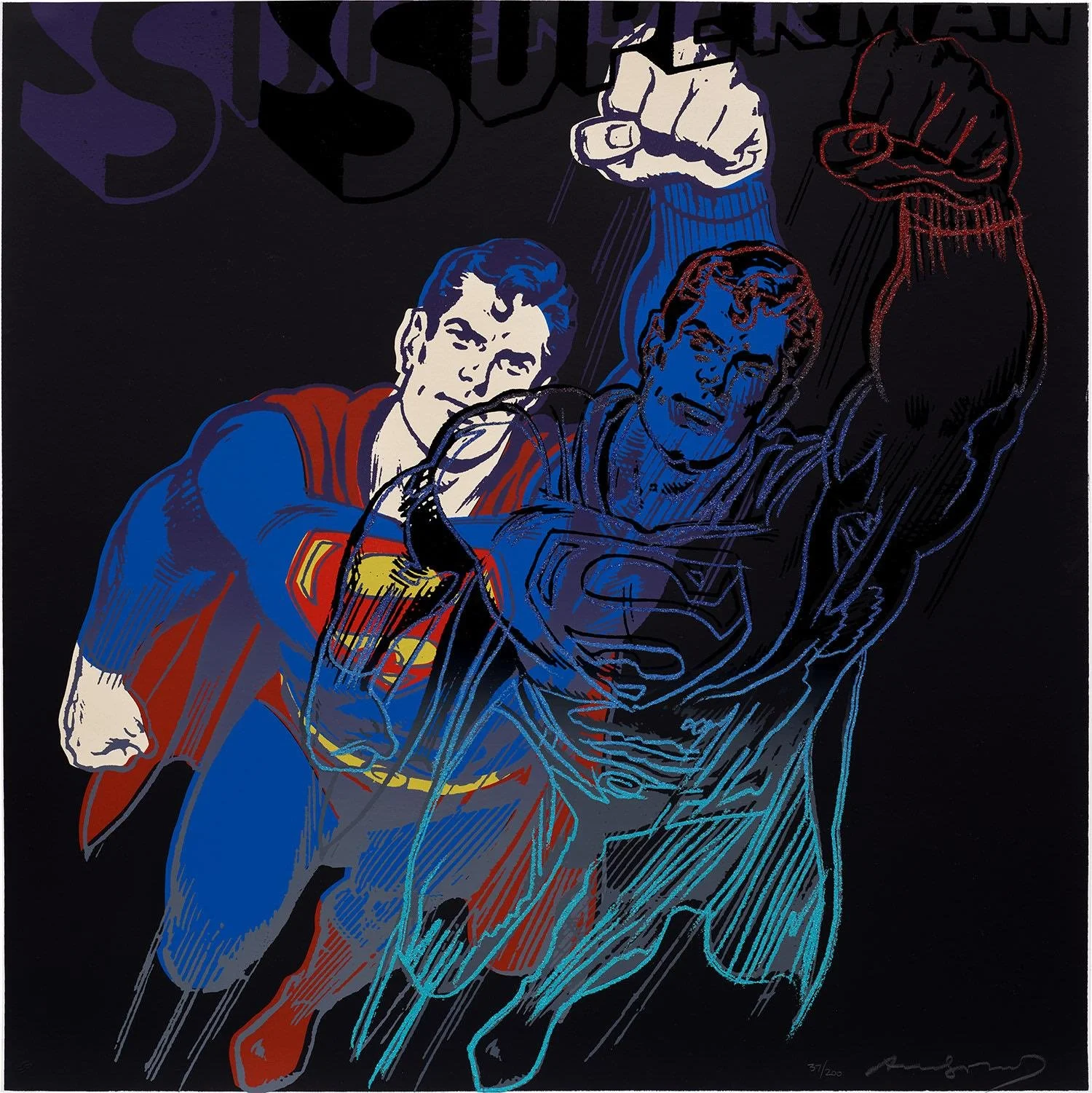
As an example, when I first started selling Warhol’s in 1999 you could buy the Warhol Superman print (from the edition of 200) for about $18,000; in 2023 two examples sold at auction for $616,000 and $750,000, respectively. There are, of course, ebbs and flows in people’s taste over time that can affect the market and value of specific pieces.
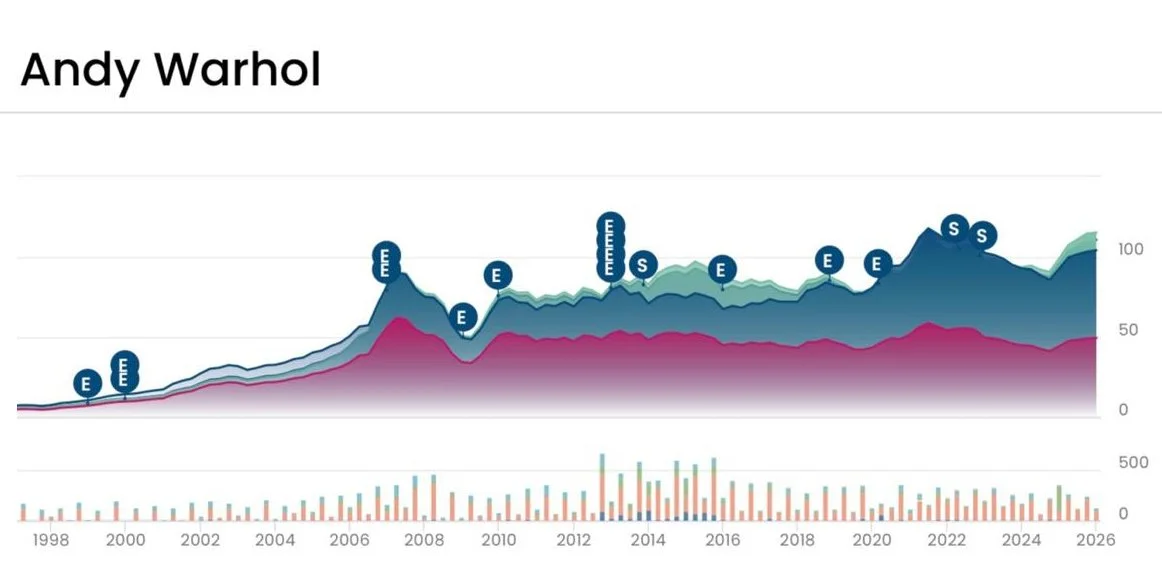
For example, the Mao prints and paintings have not fared well over the last ten years and have decreased in price as this historical image, and its context have changed with societal shifts. The opposite is true, however, with works from Warhol’s Endangered Species paintings and prints from the 1980s. As challenges around the environment and climate change have moved to the fore of debate and concern, the works are in more demand than ever.
Once your Warhol work is identified, then one can begin construct the value.
There are essentially two markets—the gallery market and the auction market. These two things may or may not be in line. Auction numbers are published, so one can review that data and assess the value of one’s Warhol. The gallery market is more of a retail market and--at times--for paintings, can yield a higher return. These numbers are not specifically made public, so the potential return would need to be worked out with some research and conversations with gallery directors.
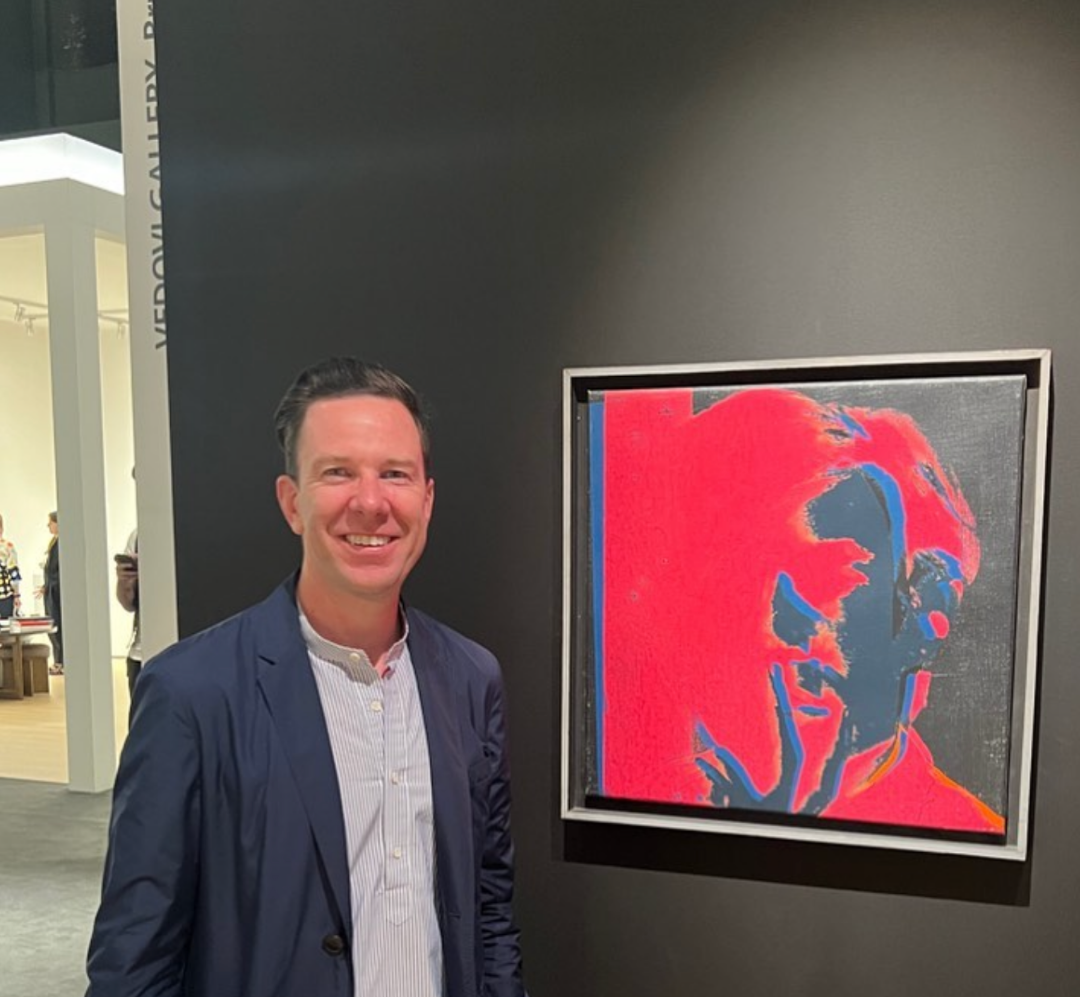
Andy Warhol (1928-1987)
Self-Portrait, 1967
Acrylic and silkscreen on canvas
Acquired at TFAF, New York
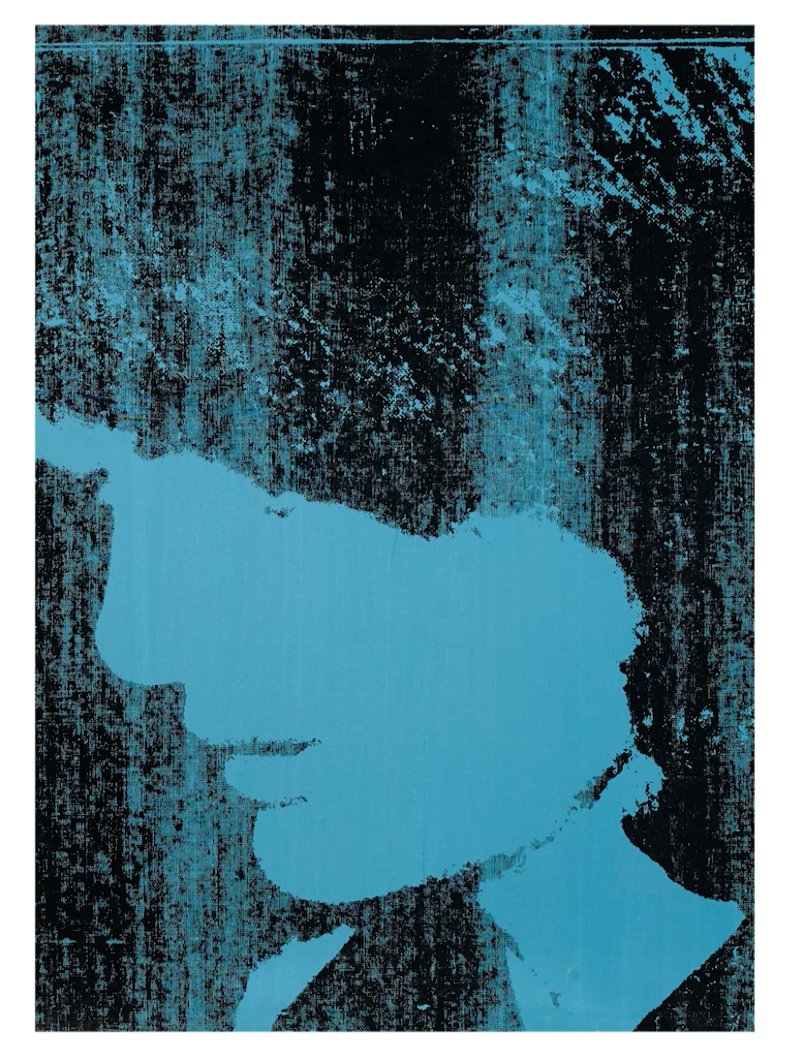
Andy Warhol (1928-1987)
Jackie, 1964
Acrylic and silkscreen on canvas
Sold in excess of $900,000 for a private collector
Paintings from Warhol (which are normally on canvas) have a value from about $200,000 on up. His works from the 60s are some of the most sought after. The very top of the market is for his Marilyn paintings, one of which sold at auction for $195 million. Paintings of cultural icons that were shown at Ferus Gallery in Los Angeles such as the Elvis and Liz paintings have sold for $30 million to $80 million. Variants of his Car Crash paintings, Soup Can works on canvas, images of Marlon Brando, Jackie Kennedy and Warhol’s own Self-Portraits all command very high prices that are well into the millions. Most collectors, however, have paintings in the $200,000 to $5,000,000 range. With that kind of value, how and where you bring your paintings to market can have a big effect on the return. Marquee galleries, private sales or auctions are all options, and the selling strategy can be key to if something sells quickly or is seen as too aggressively priced and hangs around the market.
Aside from paintings on canvas, Warhol produced a lot of other kinds of work including works on paper and prints. Prints prices have surged as of late. I sold a set some years ago for a family from Chicago more than $3 million but in today’s market they can bring as much as $5 million.
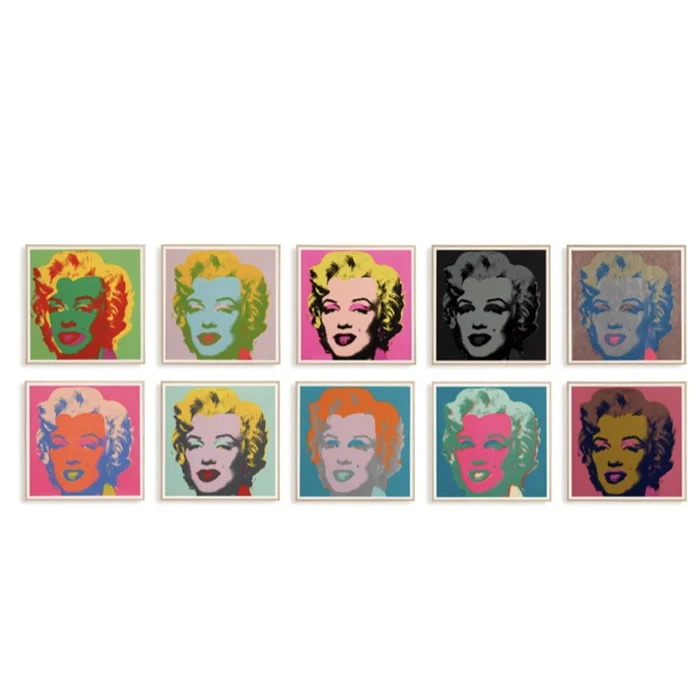
Andy Warhol (1928-1987)
Marilyn Monroe (Feldman & Schellman II.22-31), 1967
The complete set of ten screen prints in colors on wove paper
Sold privately for a Chicago family for in excess of $3,000,000
Full sets are in huge demand, especially for the set of ten Marilyn’s which bring about $5m in the current market. Dealers in the past used to buy full sets of ten prints and then break them up to sell them individually. As such, there are less and less full sets available, driving up the demand. Generally speaking, prints and works on paper typically are in the region of $25,000 - $100,000, so controlling the costs as much as getting the pricing right can add to the bottom line. If you have a print like the Cowboys and Indians Northwest Coast Mask which one could expect a return of $20,000 on, one doesn’t want to have to spend $5,000 in shipping to do so. Warhol prints can sell well in most locations so one needs to determine if one needs to ship it (or if the selling venue will pick up your shipping costs).
Something to keep in mind for Warhol is that there is no authentication board any longer, so the provenance is key.
The board was disbanded years ago due to litigation. There are many inauthentic works and/or works that will not be accepted as correct. As such, it is paramount to bring them to market with all the proper research and documents in order. There are excellent raisonnes (catalogs detailing the known artworks) that are important to consult and reference when bringing a Warhol to market to ensure any authenticity questions have been answered.
There are advantages and disadvantages to each selling scenario.
Selling at auction market is essentially a bottom-up sell; an auction house takes selling bids at or above the reserve (the lowest agreed amount the auction house can sell it for). So a work can run the risk of underselling but can sell as high as two or more bidders are willing to go. Selling with a gallery to control the asking price. This allows you have the context of an exhibition around the work which can be best for some types of work. If a gallery agrees to bring it to an art fair like Art Basel Miami Beach, the fair format can add an element of urgency to the offering as well which can drive sales. Warhol’s can also be sold privately, from one collection to another and that can a great option for the right circumstances. The key is to understand the right value, costs, the potential risks and rewards before finalizing a strategy.
If you have an Andy Warhol painting, print, work on paper or Polaroid to sell and you would like to understand the value of, do feel free to reach out and I would be happy to discuss further with you. I will provide a sale prospectus of how we can get the best possible return for you on your artwork.